
The Dreams of a Palestinian Simon Bolivar
Part 2: Nayib Bukele Embracing Central American Populism
Ben Angel
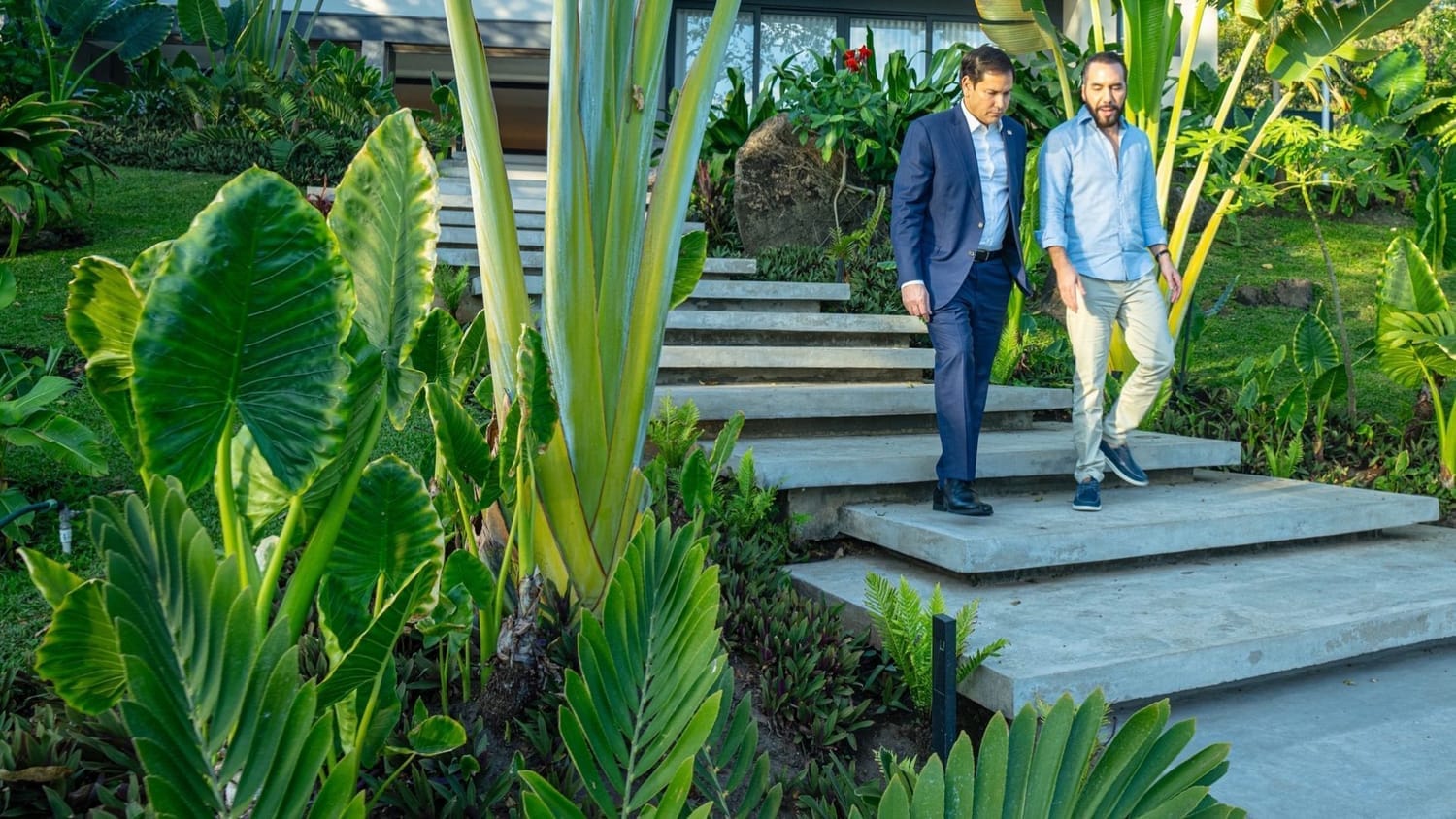
In his first term, El Salvador President Nayib Bukele put his campaign trail words into action. The first stage of his Territorial Control Plan was called “Preparation,” and it kicked off quite early, during his third week in office. This stage placed the armed forces and police in large numbers within areas where gangs still had control and locked down all the prisons in a temporary state of emergency.
The second phase, called “Opportunity,” implemented in July, was basically the “prevention” part of his campaign promises, where he built schools and sports centers, and created scholarships while improving national healthcare. Effectively, this phase reinforced the social safety net for the people of El Salvador.
The third phase again turned to enforcement. Called “Modernization,” it involved the purchase and equipping of the police and armed forces with new arms, including helicopters and drones. Though purchases actually started earlier, this phase went into full effect in August.
As with most of the world, Bukele’s next phases of his Territorial Control Plan came to a halt with the COVID-19 pandemic lockdowns. During this interval, reports appeared in the national media suggesting that Bukele’s government had been conducting negotiations with MS-13, and later Barrio 18, to lower the homicide rate. Bukele’s government denied this, particularly when the Biden administration began pressuring the Salvadorans to take a tougher stand, but it would have made sense that a carrot-and-stick approach would be tried to bring down the president’s favorite metric measuring how effective crime was being contained in El Salvador.
In July 2021, after the health crisis had sufficiently diminished, President Bukele restarted his Territorial Control Plan, implementing the next phase, “Incursion.” According to its stated goal, this was where Bukele would send in rearmed security forces into neighborhoods where gang control persisted. Until the last week of March 2022, though, an apparent truce persisted.
That all changed on March 26, 2022. A total of 62 people were murdered in the streets in the single-most deadliest day since the end of the Reagan-era Civil War. The next day marked the start of the government’s actual war on the gangs. Bukele declared a 30-day “state of exception,” during which habeas corpus was suspended while security forces carried out neighborhood blockades in door-to-door searches for gang members. He also locked down the nation’s prisons and threatened to cut off food to inmates if the gangs refused to stand down.
It was during this period that construction began on a new maximum-security prison about 50 kilometers east of San Salvador. Designed to house 40,000 inmates, the rapidly constructed Centro de Confinamiento del Terrorismo (CECOT), or Terrorism Confinement Center, occupied some 56 acres near a small town named Tecoluca. Its walls today are 30 feet tall, 24 inches thick, topped with barbed wire, protected inside and outside by electrified fences, and watched over by 19 guard towers. Gravel on both sides makes silent approaches very difficult.
While the construction of CECOT neared completion, the government implemented its fifth phase, “Extraction,” in November 2022. This phase normalized the March 2022 State of Exception, allowing for regular security sweeps of urban communities where gang leaders are known to hide. Many of these likely became CECOT’s first inmates when intake began in January 2023.
Almost as a final aside, it wasn’t until September 2023 that Bukele, well into campaigning for his second term as president, finally established a National Integrational Directory as part of his sixth phase of his Territorial Control Plan. This amounted to his third, as yet unfulfilled, prong of his campaign promises, which sought to tackle unemployment, reducing the pool from which gangs could recruit. It appeared conveniently timed to blunt criticism of his election campaign, which the nation’s constitution was supposed to have prohibited.
The effort to overturn the 2014 interpretation of at least four articles of the Constitution of El Salvador that prohibited the immediate re-election of a president must have begun close to the time Bukele came to power in June 2019. It’s hard to imagine the successful overturning of such a ruling as having taken place overnight. But by September 2021, two years and one pandemic later, he had done just that.
One violent year later, Bukele announced his re-election campaign. By June 2023, he registered as the nominee for the party he started, Nuevas Ideas, rather than GANA, and began a series of maneuvers that to his opponents seemed suspicious. For instance, he had a law passed that gave Salvadoran expatriates the opportunity to vote by mail, leading some to think that this would just result in ballot stuffing. He also reduced the number of municipalities and seats in the Legislative Assembly in such a way as to create accusations of gerrymandering. As with his war against the criminal gangs, he sought here to win, no matter the cost.
The result was a landslide victory. He also maintained a three-quarters majority in the Legislative Assembly, what Bukele said was needed to ensure that the opposition wouldn’t “liberate the gang members and use them to rise to power.” All efforts to recount and delay the inevitable victory proved predictably futile.
What appears to have resulted is a new pseudo-ideology called “Bukelism.” He’s neither left-wing, nor of the classical right-wing. Some suggest that he is of the populist right, “El Salvador’s Trump.” However, to simplify his views to that level would probably misinterpret the values that motivate him, particularly concerning the proposed use of CECOT to house American political prisoners alongside its most violent felons.
Bukele clearly does have a political ax to grind in terms of how Biden treated his efforts to end gang violence during his first term. Likely nodding to earlier US pressure to give MS-13 and Barrio 18 no quarter in talks, Bukele promised during the campaign that El Salvador would work with international partners if they respected the country as an equal, rather than as a subordinate.
When Trump’s Secretary of State Marco Rubio came to him with a proposal to take on ICE detainees previously kept at a facility in Texas, the US representation likely respected that pre-condition. And given that taking on US detainees would be a money-making venture, one that could finance the various infrastructure projects that Bukele wants to make happen, this likely led to him “giving over completely to the dark side.” In the month of his re-election, he came to the United States to speak at the Conservative Political Action Convention (CPAC) against the Open Society efforts of George Soros, of whom nationalists around the world have never let go as the face of “globalism,” their mortal enemy.
Nevertheless, he’s not for “closed borders.” Indeed, he has resurrected the dream of a new Federal Republic of Central America, the long-extinct post-New Spain country that broke apart into five Central American states (Guatemala, Honduras, Nicaragua, Costa Rica, and El Salvador) by 1841. Indeed, he might even go one better than Francisco Morazan, the founder of the 19th century republic that Bukele likens himself to by also incorporating Belize and Panama into the fold (Belize was British and Panama was Colombian in 1823).
Such aspirations might ring a little of the “Dark MAGA” dream of a united technocratic North America, but thus far his proposals look more like Mercosur or the European Union. Admittedly, this minor adjustment to Bukele’s vision, from single state to single union of states, might be more from realistic necessity than anything as none of the other Central American leaders have expressed the desire to give up their sovereignty. But the idea of being a new Simon Bolivar does play a part in how Bukele sees himself.
Which should take us back to the question of how his Palestinian roots might have helped create the Nayib Bukele that rules El Salvador today. They perhaps have little to do with his political leadership, other than he’s a survivor. His personal experience, on the other hand, tells us more of how he evolved into what he is today. He’s prosecuted a rather successful war against very brutal enemies in the form of street gangs, but he’s done so by descending to their level of violence. He’s easily outraged and will act on that outrage in ways that can be described as vindictive, but he dreams big and is adept at the fine art of marketing his aspirations.
So, Nayib Bukele is like a man at a crossroads. He can build El Salvador up to become the envy of its neighbors – he’s already done much to dig it out of the hole that the post-civil war gangs held it in – or he could create a personal empire subordinated to those whose pockets are temporarily deeper than his, but who are building wealth on a shaky foundation of corruption and con artistry. He’d do better to seek equal partnerships with those who would be sincere in their mutual respect, rather than give in to youthful impatience and take the first offer that came down the road. As most of New York knows, Trump is a terrible person to do business with.
(This is Part 2 of a two-part biography of Nayib Bukele, the President of El Salvador, examining his activities during his presidential years. Please refer to Part 1, for a brief review of his family history and pre-presidential years.)