
Information Literacy Series of Short Articles on: How to Analyze, Evaluate, and Make Arguments
No. 2 - “What Is a Claim?”
Blake Wollstonecraft
In this series of short articles, I hope to help readers who want to increase their information literacy, also known as their ability to better analyze what’s true, what’s right, what’s real versus what’s not.
This series is inspired by my sister, a hardworking mom of teenagers who often turns to me for quick summaries of news and events, or what we call the “TLDR summarize” – “Too Long, Didn’t Read”. Since I have more time to stay updated, she relies on me to distill the key points, sparking thoughtful conversations as she shapes her own perspective.
Like my sister, you’re probably juggling a lot and still striving to sharpen your ability to read, analyze, and navigate the flood of news, social media, and various arguments out there “in the wild”. You want to build informed opinions, feel confident, and trust your judgment — and I’m here to help make that process easier.
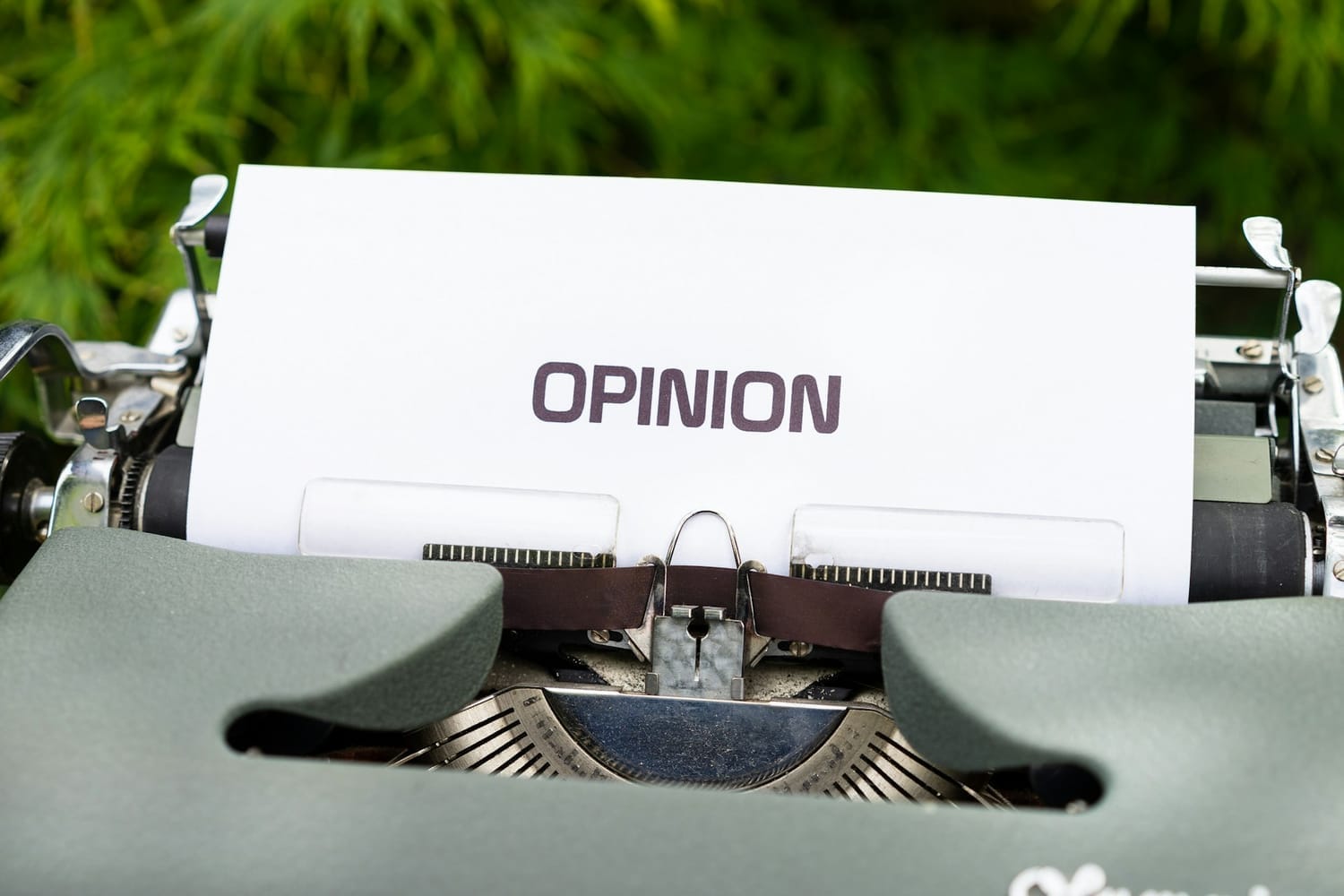
Opinion is today’s key word.
It is the foundation of how we interpret, debate, and engage with the world around us, whether we’re analyzing the news, scrolling through social media, or discussing ideas with others. Let’s dive deeper into why opinions matter.
In my previous piece, I explained that the best way to analyze an argument is to begin with its foundation, which is the claim. A strong, valid claim should 1) be grounded in facts and 2) present an opinion that two rational individuals could debate in good faith, potentially arriving at different conclusions about its correctness.
What does that mean, exactly? Well, let’s look at an example of a claim.
Someone might claim that “The US federal government should not provide food assistance, such as SNAP benefits, to the poor.” You’ll see this claim being made right now as the US House and Senate debate the “Big, Beautiful, Bill”, a finance bill that will impact how our tax dollars do or do not fund the US federal government operations in coming years.
Is this claim an opinion?
Yes. It seems pretty obvious. There’s that word “should” that we know is synonymous with someone having an opinion.
Is it an opinion that another rational person might debate?
Yes. It’s actively being debated right now by US Representatives and Senators who are rational, which means they know what is real versus fantasy.
Is this opinion based on facts? What facts might it be based on?
You can Google this question yourself. A quick search will show that many arguments against U.S. federal food assistance aren’t based on facts. Some stem from policy preferences, but others rely on misconceptions or misleading claims.
In many cases, the people who make this claim do not back it up with hard facts, and often with none. Instead, they back it up with several more opinions.
For an excellent, concise, and brief tutorial on how to know what a belief is versus an opinion or a fact, see this article: “Distinguishing Fact, Opinion, Belief, and Prejudice.”
Here’s a quick summary of the article:
Fact: “A fact is verifiable. We can determine whether it is true by researching the evidence.”
Opinion: “An opinion is a judgment based on facts, an honest attempt to draw a reasonable conclusion from factual evidence.”
Belief: “Unlike an opinion, a belief is a conviction based on cultural or personal faith, morality, or values. Statements such as ‘Capital punishment is legalized murder’ are often called ‘opinions’ because they express viewpoints, but they are not based on facts or other evidence. They cannot be disproved or even contested in a rational or logical manner (CSU).”
Since many people claim that “the US federal government shouldn’t provide food assistance to the poor” because they believe it’s morally wrong, basing the belief on the idea it promotes laziness among recipients, does this mean that someone couldn’t base this same claim on a verifiable fact? Not necessarily.
In good faith, let’s look at how someone might argue this claim based on a fact. For instance, certain conservatives believe that the US founders meant for future generations to use the exact text of the constitution, as it was originally written, to answer any questions about what the US federal government should or should not do. These “originalists,” as they call themselves, might point to the fact that the founders of the United States did not explicitly state that the US federal government should “provide food assistance to the poor,” in the constitution when it was originally written; so, therefore, it should not be required today.
On the other hand, someone else who makes the claim that “the US federal government should provide food assistance to the poor,” might point to the fact that the founders of the United States believed so strongly that the US federal government was established with the objective to “promote the general Welfare” of its citizens, that the founders put that exact phrase in the preamble of the US constitution:
"We the People of the United States, in Order to form a more perfect Union, establish Justice, insure domestic Tranquility, provide for the common defense, promote the general Welfare, and secure the Blessings of Liberty to ourselves and our Posterity, do ordain and establish this Constitution for the United States of America…”
Each of these two people could then strengthen and support their respective claims by providing additional reasons, backed by additional facts, as well as supporting evidence that offers more specific details.
If these two people were sincere about coming together to argue, in a fact-based way, about the best solution to the problem of food insecurity in America, they might come to a win-win solution, with some compromises made by each side.
SNAP is that win-win solution. SNAP is a debit-card based food assistance program (replacing “food stamps”) that the US federal government includes within the larger Farm Bill, a funding package that must be approved each year by Congress. The Farm Bill sets “funding, eligibility requirements, and other program guidelines” for SNAP, and it provides important supports for the US farmers who grow food for all of us. SNAP, formerly known as “food stamps,” has had such strong bipartisan support that it has been approved by Congress every year since 1964, though often with deep cuts that more conservative representatives argue should be made to the benefits and which more liberal members argue should not be made (Google AI).
What does the above example tell you about argumentation? What does it tell you about your own journey to become more literate about what makes or doesn’t make a valid argument? Recognizing and understanding that a valid public policy claim should be grounded in and built on facts, while also possibly allowing room for opinion and belief, is step one of a lifelong journey in becoming a person who is more informed and more involved in our shared civic life.
Next up, we’ll take a closer look at the ways a valid claim is backed up with strong reasons and evidence.